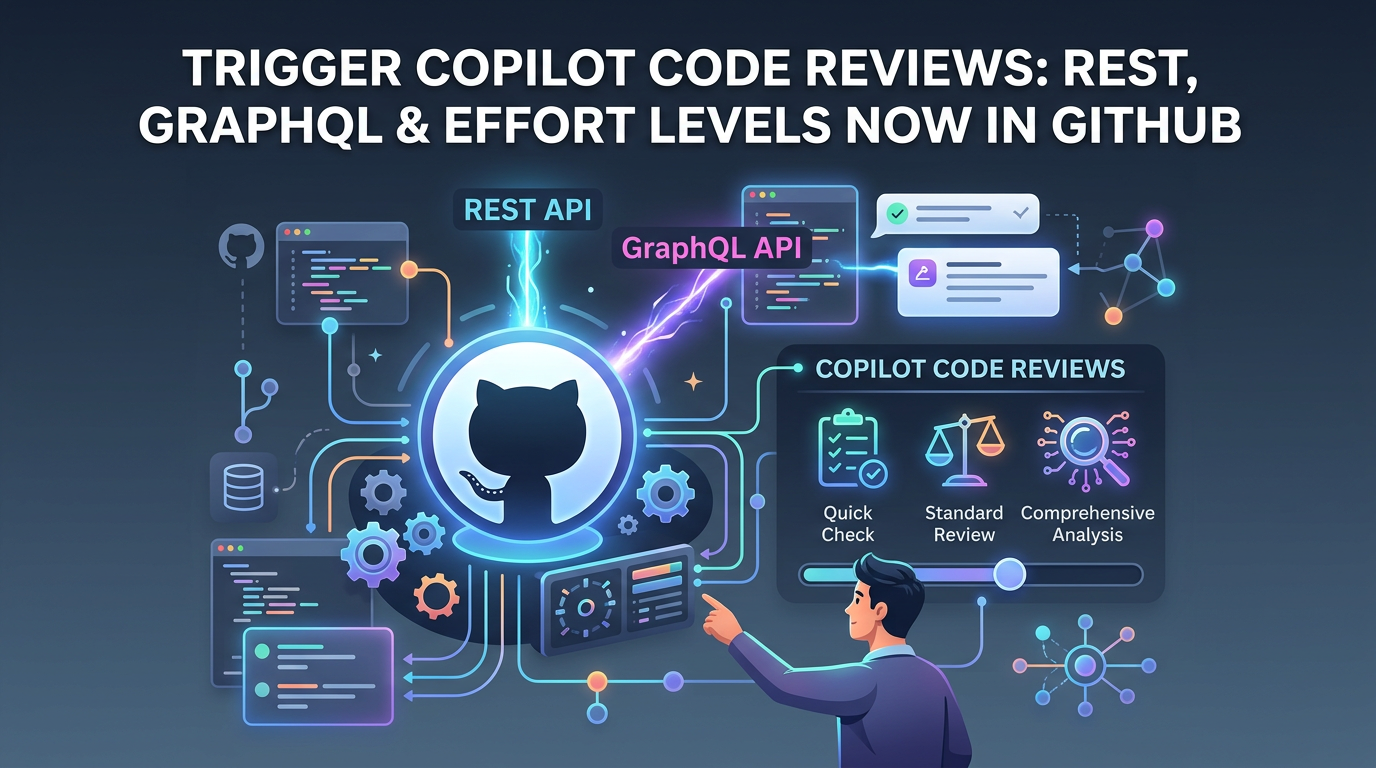
GitHub expanded Copilot code review on October 2, 2026 by adding REST and GraphQL API support. Teams can now request a Copilot review from their own scripts, internal tools, and automated workflows instead of relying only on the GitHub user interface.
What changed
API requests can trigger Copilot code review and optionally specify the review effort level. GitHub also made Balanced the default review effort level for repositories and organizations that use the Default setting.
Why API access matters
Code review is often part of a larger engineering pipeline. A team may want a review to run after a pull request reaches a certain state, after a generated code change is created by another agent, or as part of an internal release workflow. API support makes Copilot easier to incorporate into those systems.
Review effort as a control
Different pull requests need different levels of analysis. A small documentation change does not necessarily justify the same review depth as a security-sensitive architectural change. Per-request effort control gives automation systems another parameter to tune for speed, cost, and review depth.
Agentic development implications
As coding agents increasingly create pull requests themselves, automated review becomes an important verification stage. An organization can build a pipeline in which an agent writes code, Copilot reviews it, tests run, and humans decide whether the result is acceptable.
Practical takeaway
Teams using Copilot at scale should consider API-triggered review as part of their CI and agent workflows. Start with non-blocking reviews, measure false positives and useful findings, and only add automatic merge gates after the process is reliable.